Featured Post

Fix, Don’t Discard MCAS/PARCC

This fall I had one on one conversations with many of our state's leaders and experts on the misplaced opposition to testing in gen...

Showing posts with label Learning Blogs. Show all posts

Wednesday, December 22, 2021

It matters who they know, not just what they know.


https://www.christenseninstitute.org/blog/how-an-asset-based-approach-to-building-students-networks-can-expand-their-opportunities/?utm_source=Ed%20Digest&utm_medium=email&utm_campaign=12%2F17%2F21


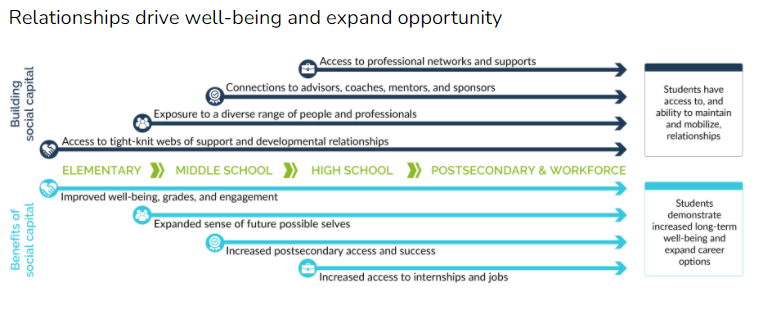
In recent years, the term “asset-based” has become increasingly popular in youth development and education lexicons. It marks an important, and arguably long overdue shift toward understanding and intentionally building on students’ strengths and talents, rather than focusing exclusively on their deficiencies. More often than not, however, calls to take a more asset-based approach in schools situate individual students as the locus of control and change. Individual strengths, experiences, and perspectives are celebrated and built upon.   But our research on social capital suggests that the concept of assets is accurate yet incomplete. The reality is that students’ assets reside not just within, but around them in their networks.

https://whoyouknow.org/playbook/take-stock/


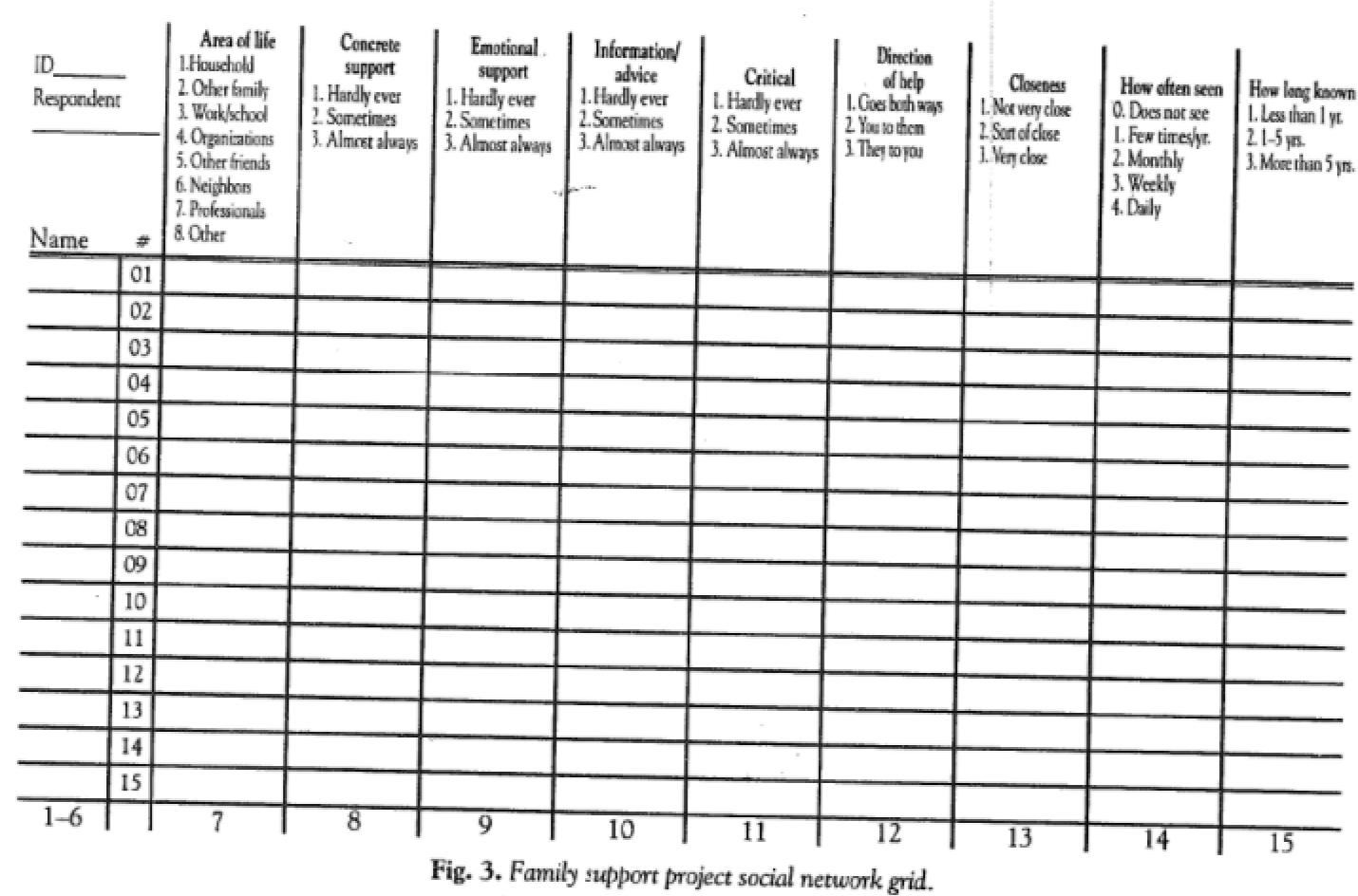
  1. If you want to understand broader networks that students have access to outside of your school or program → Try social network mapping: For decades, social workers have used asset mapping, a close cousin to relationship mapping, in order to assess the support networks of their clients. One example is the Social Network Map, developed by researchers Elizabeth Tracy of Case Western Reserve University and James Whittaker of the University of Washington. Their tool helps case managers identify and sort the structure and quality of a client’s support system by mapping relationships into several categories, including family, peers, friends, and co-workers. Researchers recommend doing multiple rounds of relationship or social network mapping because students may forget to include certain connections that make a difference in their lives. You can gain a more complete picture of who your students know and depend on by revisiting relationship and social network maps. Read more about this approach in the article “The Social Network Map”.

  1. If you’re trying to better understand relationships inside your school or department → Try relationship mapping protocols with your team and students:  Relationship mapping is a strategy that can help schools adjust their practices to effectively forge trusting relationships between students and adults. All it takes is a roster of student names and two sets of different colored stickers for staff to visualize patterns among whom they feel they have a strong relationship with and whom they believe may be at risk for academic, personal, or other reasons. Larger schools and institutions may prefer to move through the process one grade level or department at a time. You can also perform mapping exercises across both staff and students to compare the results. From there, schools that identify students who lack trusting relationships with adults or faculty can direct additional connections and resources accordingly. For example, watch Ted Dintersmith’s Innovation Playlist to see relationship mapping in action at Jamestown Public Schools.


  1. If you’re working in a resource-scarce, human capital-scarce environment → Use relationship and networking mapping as a student project to identify latent resources: Not only does relationship mapping provide more detailed information regarding whom your students know and turn to—it can also surface relationships that you could enlist more deliberately to expand supports or opportunities at your institution. Make sure you have a shared contact database where you can store these connections so that they remain within reach for your community to tap into in the future.


Monday, January 12, 2015

Learning Logs - xAPI

A learning log is a close cousin of a learning blog.

xAPI is a new specification for learning technology that enables data to be collected about the wide range of experiences a person has (online and offline). This API captures data in a consistent format about a person or group’s activities from many technologies. Different systems are able to securely communicate by capturing and sharing this stream of activities using xAPIs simple vocabulary.

Friday, January 9, 2015

Susan Davis on Learning Blogs

http://gettingsmart.com/2015/01/raising-student-bloggers-open-letter-parents

Raising Student Bloggers: An Open Letter to Parents

BLOG SERIES , SMART TEACHERS 

For the past few months, your student, if he or she is in an İngilizce class like mine , has plunged head first into the world of blogging. They've Offered up observations about the world, described them the passions, and discovered new ideas and information shared with others through self-directed research. This is what writing looks like in the 21st century. 
Your student has learned how to find a focus and a voice, to shape into meaningful thoughts Statements made up of carefully chosen words, well-crafted sentences, Paragraphs organized, insightful images, practical links, tags and helpful. Your student has to write to invite commentary and interaction from others and to document the evolution of them are thinking. He or she has learned how to extend the conversations raised by the blogging peers through Questioning and thoughtful commentary. Your student has developed essential skills in modern-day communication.
And we've just begun. Now it's time for you to become more involved in your student's growth as a learner who actively shares her best feeling it (and evolving) self with the world.

Talk about Blogs and Blogging

What is your understanding of blogs and blogging? Show your student what it means to be an active participant in the blogosphere by reading blogs together, talking about what goes into them, considering them the challenges, and learning more about the way blogs permeate and affect our culture.
If you already read the blogs on subjects that interest you and your student, share them. Explain why you read them and what you learn; describe how you achieve balance by looking at multiple Viewpoints. Show how you interact with the blog, how you question what is said, how you spin off into new ideas of your own. Explore the ways a blogger makes choices to get an idea across it to make a particular impact on a reader.
Discuss your comfort level with the privacy and professionalism (or lack of it) Adopted by the blogs you follow, and show how you might handle similar in circumstances. Have a conversation about what it means to be kind and respectful in an online space, why it matters that we should be good digital Citizens online ( Cyberwis to , Started by parents of digital-age Students, is a great source of information). Remind your student, when Necessary, to follow basic Practices for online safety (not revealing last names or sharing personal data such as phone numbers, addresses, or when you might be away from home).
If you are not yet a reader of blogs, ask your student about blogging and spend some time seeking out blogs that are related to the Activities you enjoy sharing together. Learn from the breadth of writing online how much a blog can do.

Reinforce Learning

Ask how it feels to block. Talk about a blog's inherent transparency - what does this mean exactly? Authentically Talk about the impact of writing for a real audience who may talk back. How was this different from other kinds of writing your student may do? Discuss your student's response to taking ownership of their own learning is through blogging.
Help your student reflect on what he or she does and how they learn through blogging. How do they make meaning and take without risk, and go beyond a mere recitation of content? What results from the sharing their passions and interests with others? How do they grow in a personal as well as academic sense? What does your child think about possibly connecting with experts who can further feel that every learning? How does a blog will allow your student to document their growth over time she thinking?
Now that your student has begun to think of him or herself as a practicing writer, how is he or she is improving as a writer? It's importante here to ask for reflections rather than step in and offer your own critique. What does he think he's doing better? What does she recognize that she needs to work on in order to make all blogs stand out and have the impact on a reader she wants to have? How do they want to experiment in the writing them?

Become a Fan

Every writer needs readers, so now it's time for you to become your blogger's first fan. Read your student-blogger's posts and interact in person as well as online. In addition, share them with other trusted blogs, nurturing adults. Greg Nadeau offers insights about how parents can support them are children's learning in the sense 2013 tedxbeaconstreet Talk, "Blogs and Badges: The Future of Learning." I like feeling idea of ​​Midwest Sugata Mitra's "Granny Cloud" concept by suggesting that parents select four other adults importante in each student-blogger's life to become loyal readers and responders.
As you become comfortable with sharing your child's work as a parent, you can promote the child's blog through social media. Is seeking a broad, authentic audience can enhance the student's learning even further.
Adult readers should offer essential positive reinforcement for hard work, original ideas, perseverance. It's importante to realize, however, that the child is the one who must put forth the effort, make mistakes, and reap the benefits of learning from experience. Adult readers can also encourage experimentation and engage the student-blogger in conversations about the topic at hand by asking sincere questions that the blogger nudge towards deeper thinking.

Imagine the Bigger Picture

By interacting honestly, responsibly, and supportively with student-bloggers, trusted adults can help student-bloggers grow as writers and thinkers, as communicators who have something of value to add to today's world. Interacting on a global scale will be a large part of their Lives. Helping them understand how to engage productively and creatively with the readers beyond the boundaries of their daily experience is a huge gift for today's students.
By conversing with student bloggers, in person and online, adult readers can learn along with them as they celebrate successes and improve upon mistakes, as they take chances with what they do not know and demonstrat on how their are learning happens. What better way to stay in touch with them as they grow up? And once they've come this far, we can than open up their blogs to the world!
In the long run, an authentic, worldwide audience for blogging can also help students The see them will work as something worthy of sharing with others - and raise the bar for their online presence overall. Ultimately, those same Students can use their blogs as seeds for a digital Portfolios that will give them room to curate and display the evidence of them is learning throughout their Lives. What a powerful way for students The guiding learners into the online experts and they will become!
For more on student blogging, check out:
Susan Lucille Davis

Susan Lucille Davis

Susan Lucille Davis Teaches 7th- and 8th-grade İngilizce at the 'Iolani School in Honolulu, HI. Follow Susan on Twitter atsuludavis.

Thursday, July 31, 2014

Student Value Blogging

6th-Graders Have Their Say: Why Students Value Blogging

Using the platform Kidblog, my students wrote at least nine blog posts (some even chose to write more on their own initiative), five of them as specific writing assignments and four of them as “free posts.” By the end of the year, I could see the giant leaps their writing had taken, but I wondered, could they? So, for their final post of the year, I asked them to evaluate their growth through blogging to make a case for blogging in the 7th grade (if that was indeed what they wanted to do).  Here’s what they had to say.

Skeptics Convinced 

Many students were skeptical at first, or at least unsure of how blogging would work out for them. It was new and untried territory. By they end, they had changed their minds and were won over completely.
  • I have really enjoyed blogging this year. It has been a fun way to learn new writing skills. In 5th grade I didn’t really like writing. It seemed boring and like a chore. When we started blogging this year, I was really unsure about it. I thought it would be just a trick to make writing seem more exciting. I was so wrong! Blogging has been really fun for me. Blogging has let me write about things I like and enjoy, such as holidays and video games. If we just wrote papers and essays this year, I would probably get burnt out. I would not try as hard, and it would not be very enjoyable. I really want to continue this amazing experience next year. –  Caden
  • I thought it would be fun to be able to make our own posts on subjects of our choice. I was a little put off when I heard that half the posts would be free and the others would be assignments…. Now I’ve made eight posts, and soon to be nine. I can really show my improvement between my first post and my 7th. – Nate

7 Ways Students Value Blogging

1. First and foremost, students valued the opportunity for self-expression and freedom to share their feelings when writing blog posts.
  • I want to continue to write these posts … because they help me put all my thoughts into words and to stretch my creativity. – Lani
  • I like how there is no limit to how long or short blogs are. I like the freedom of blogs and their structure.  —Giselle
  • Writing the free post blogs was the best part of all, just sharing something that is cool to you and knowing that at least a few classmates are reading your blog and possibly thinking it is interesting. Every time I heard we could do a free blog, I was excited to share and get my own blog published. That feeling is a great feeling, just knowing that you PUBLISHED your own work at school! — Jack
2. Many students also saw blogging as a way to explore voice or personal style, something they may be more hesitant to do with more traditional writing assignments.
  • I feel blogging has let me grow by exposing me to different styles of writing. On a blog post I can act funny, sarcastic, or happy, and I can put my own opinion in what I write about. On a formal paper, most of the time, I don’t get to add my own personal touch. — Nina
  • I learned that … if you want to grab a reader’s attention, you have to have an interesting opening sentence. You don’t want to have an opening sentence that states what you are going to talk about in the blog. Instead, you just want to go straight into the topic. I also don’t repeat words or phrases like “I think” as much. In my first draft of one of my blog posts I kept beginning my sentence with “I think.” My teacher told me that the entire blog was about what I thought, so I went back and took out all the “I thinks.” Now my blog post has a nice flow to it. — Catherine
3. Students remarked upon being surprised by their writing’s growing depth, detail, and fluency.
  • Blogging this year has helped me write more descriptively.My first blogs … were detailed, but they didn’t have as many specific details as my newest ones do. Now, I have improved by explaining and expanding my thought…. They are the longest, but that has nothing to do with how good and detailed it is. These [last] 2 blogs have a bigger idea that has been told with more detail and a better view of the story. – Riley
  • My best blog…had more than 1,600 words. It took me a while to write, but I wanted it to be the best blog I could write…. I was so excited, and I couldn’t wait to write another one. – Audrey
  • My writing is definitely more dense and interesting. Last year with my writing I was used to the teacher just handing us a topic to write about, but now since our topics are free, I think my writing has gotten stronger. —Diego
  • At the beginning of the year, my writing was dull and boring. There was no deep language that could transform the context I wrote about. But, nowadays, my writing is colorful and vibrant. It really has a deep meaning. My writing is more understandable. – Dania
4. An important element of blogging is the opportunity for students to write in a social context, to collaborate in their learning by sharing their work with one another.
  • I really want to continue blogging next year because I enjoy writing about everyday life and about things I like. Another thing I enjoy about blogging is reading about things other people like. — Laura
  • Blogging has helped me with my writing a lot, because it allows me to practice my skills more often. It has also helped me to express my ideas with others. This allows me to compare my opinions with my classmates in a faster and more efficient manner.  Lastly, I now know how to comment and discuss topics on other people’s posts. –Devin
  • I have learned to appreciate others’ blog posts, even though sometimes I disagree with them. Also, I have learned how to express my own opinions in writing. Some students have really advanced blogs. By reading those well-written posts, I have been challenged to write more detailed and longer posts. – Connor
  • When we look at each other’s blog posts, it’s almost like listening to an oral presentation.  I also like how people can comment and give you feedback and start a discussion that might not have been able to occur physically in the classroom. — Abby
5. On their own, students discovered the value in receiving quality feedback from their peers as well as their teacher.
  • I think that any piece of regular writing helps you progress as a writer, because it lets you practice your writing skills. The only reason I like blogging more is that it makes it easier to share and get feedback on your writings. Before Kidblog, we had to just put the writings on the wall in the classroom, and if we wanted feedback, we would have to take a whole class just to say how other people liked it. Now we can just give and get feedback at our house.  – Joseph
  • I have learned a lot more about writing from all of the critiques that I have received from Ms. Davis. At first a critique sounds really awful and rude, but it helps you learn something you didn’t even know could be a mistake! — Jack
6. My students came to their own understanding of why grammar and vocabulary matter.
  • Blogging has helped me learn and grow as writer because I now know how to use commas and how to make fragment a whole sentence.  Blogging is a good thing to use to help with grammar, because if you mess up, everyone sees it and it’s embarrassing. – Will
  • Throughout the year, I have learned new techniques for grammar from reading other people’s blogs and from some of my own. Every time I write a blog I learn a new way to use words. — Sterling
7. Finally, students recognize that the way we communicate is different today, and they appreciate ways to practice authentic 21st-century learning.
  • When I first started blogging, I didn’t enjoy it. I thought it would be a waste of time, and I would rather just write an essay. But as the year went on.… I realized that technology is becoming more and more a part of a student’s academic career. The future of a student’s essays will take place on an electronic device and not pen and paper…. I enjoy writing electronically and not just with pen and paper. — Duncan

A Little Pushback and Some Final Thoughts

Not every student has fully bought into the value of blogging – it’s a big leap even to see it as writing for some. Yet, the very nature of its difference from traditional writing is exactly what they like about it, so they worry that they still need more direct teaching of “real” writing skills to be able to succeed academically. And the process of responding to student blogs is slow, for me at least, especially for writers who are eager to have their work published and read by their peers right away.
  • I have enjoyed blogging so much this year, but I think we should do something different next year. The reason I say this is because we have not had our last two blogs posted yet. I do not blame the teacher because it takes a long time to read all of the blog posts. I do agree that it does help grow as a writer, but it is just a little boost, not a full jumpstart. – Will
Yet, the overwhelming majority of my students asked to blog again next year. With more freedom to post more quickly, before a teacher’s review of their work, they might really take off! Here are some of their concluding thoughts:
  • Everyone has gotten so good at blogging. I don’t think we will want to give it up. – Sam
  • It has pushed me to be the best writer I can be. I think blogging has been a big impact on our lives and has helped us grow as learners. Yes, we are not perfect bloggers yet, and I may have a few incorrect spellings or grammar errors, but we can change that if we blog next year. – Raegan
  • I think that blogging should be in every grade in middle school, because it is a great way to practice writing. –Josh
  • Why let your mind’s secret writing hide away and go to waste! – Dania
  • I like to look at blogging like swimming. Swimming is one of the best things for your body because it exercises every part. Blogging helps exercise every part of Language Arts, and it is also a good way to gain information on the world around us. — Maddie
I feel enormously gratified that my students themselves recognize how much they have learned through blogging.  Even so, it doesn’t hurt that standardized tests have provided concrete data to support their reflections about their growth: overall my students made significant gains in vocabulary and writing skills. One student even launched a consulting business, providing advice to other students about organization, through her blog. Other students boosted their confidence when they received unexpected accolades from peers who recognized them for “Best Post of the Year.” As a result, there is no doubt in my mind that blogging is one of the best tools we can use to help grow writers of the future.
Photo Credits:
Riley, “Just Keep Blogging” via Recite (used with permission)

Susan Lucille Davis

Susan Lucille Davis

Susan Lucille Davis teaches 5th and 6th-grade Language Arts at St. Mark's Episcopal School in Houston, TX, and is a part-time instructor for CTYOnline, a program for gifted students hosted by Johns Hopkins University. Susan also contributes to the group blog Voices from the Learning Revolution, which features stories by educators who are making the shift to 21st century learning.Follow Susan on Twitter at @suludavis.

Thursday, February 27, 2014

Helping Students Create Positive Digital Footprints

Christine Fisher
Steve JohnsonWhen asked what words come to mind when they think about students posting to the Internet, many educators list words like danger and safety.
But with the likes of Robert Nay—who created one of the most downloaded iPad apps of 2011 when he was just 14—and even Justin Bieber—who began his international superstardom as a YouTube sensation—as inspiration, students and teachers alike should know the positives that posting to the Internet can offer.
This was the message Steve Johnson, a technology skills teacher, parent, and author of two education books, shared during his Saturday session, "Digital Footprints: Your Students' New First Impression."
"The main idea we get from surveying teachers [about students posting online] is there [are] a lot of negative connotations," Johnson said, as he aimed to reverse these negative perceptions and encourage educators to promote student-produced online content in their classrooms.
Although employers and prospective colleges may reject candidates based on their digital footprints—what he described as "the traces of where you've been, where you're going, and what you've been doing on the Internet"—Johnson said that many students benefit from attracting potential employers through profiles and blogs. Producing online content can be an opportunity for students to express themselves and be creative.
Schools are missing an opportunity when they avoid encouraging or teaching students how to post online, Johnson said. Citing Bieber and Nay as successful examples, Johnson said, "The thing that is a common theme, if you look at these kids, is that they are almost always doing this outside of school.... And I think that's kind of a tragedy."
To guide positive online posting, teachers need to build an environment of flexible problem solving where students are immersed in tasks, can make mistakes, and find multiple solutions, Johnson said.
"They are going to make mistakes," he said. "It's better to learn from that in a safe, caring environment."
To avoid any negative repercussions, Johnson stressed the importance of guiding students through posting online content in the safety of the classroom.
He recommended asking students if they have ever seen something they or a friend posted online spiral out of control. He advised educators to remind students to keep passwords private and to remember that, while Facebook privacy settings may be restrictive, content seen by Facebook "friends" can easily be shared with others.
Johnson also encouraged teachers to model responsible Internet use by posting their own blogs, portfolios, and content through tools such as Weebly, where teachers can create student websites; ePals, a social network optimized for K–12 learning; and KidBlog.org, a tool for elementary and middle school teachers looking to create and moderate student blogs.
"I really think we are at an awesome point with our kids," Johnson said. "We are really at a beginning point…. They're really starting their digital lives in our classrooms."

View Johnson's presentation in Prezi format.